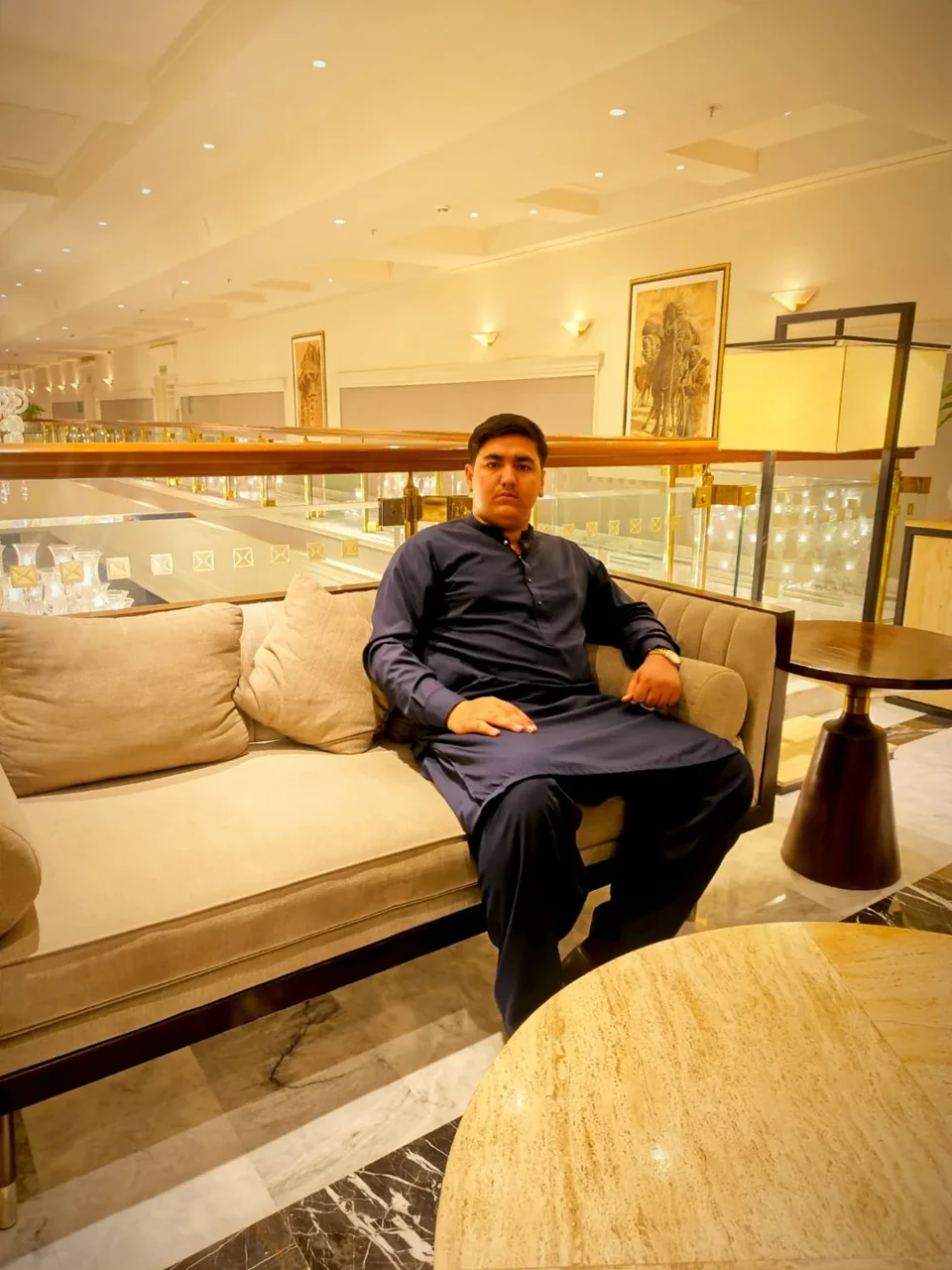
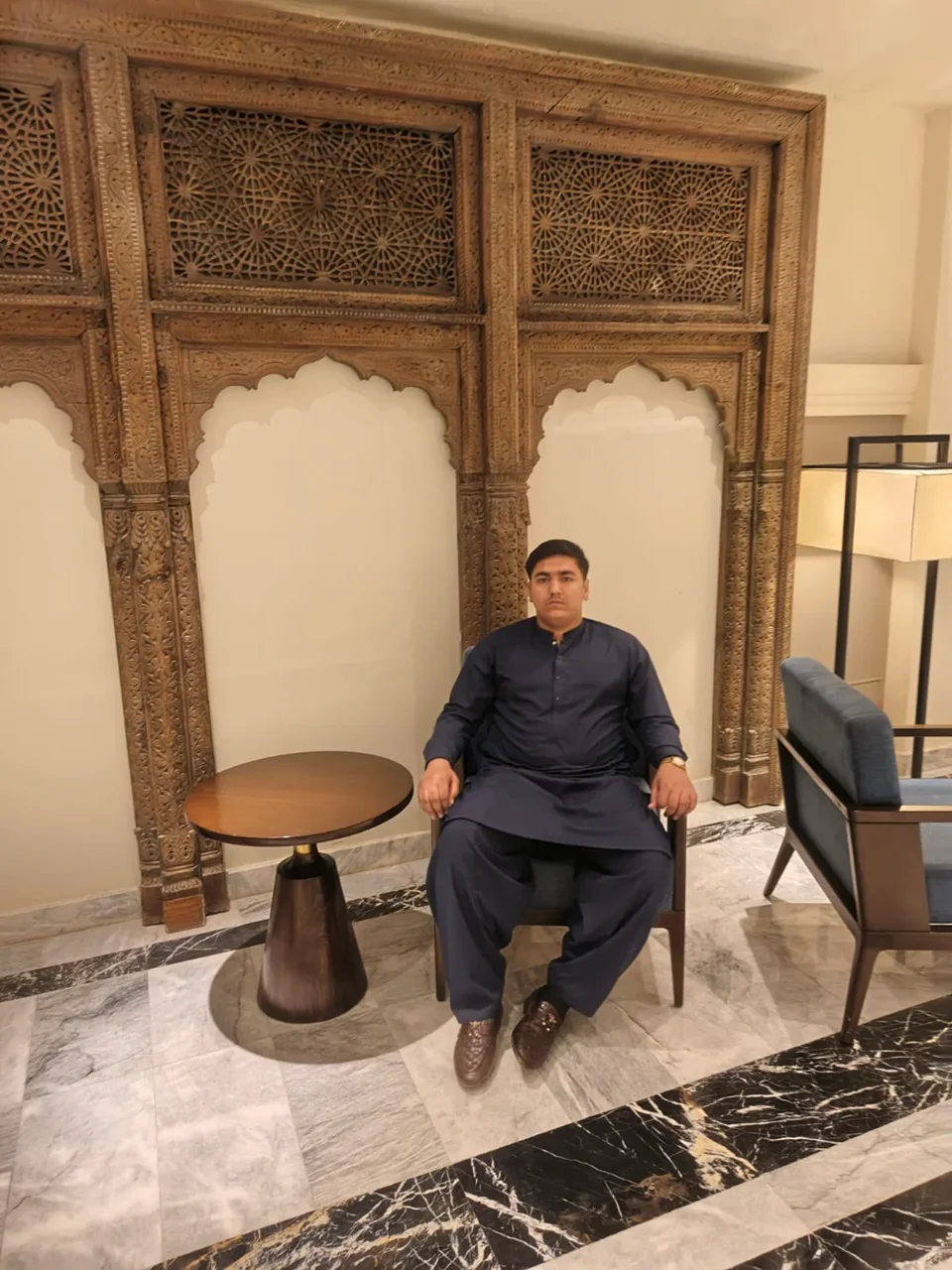
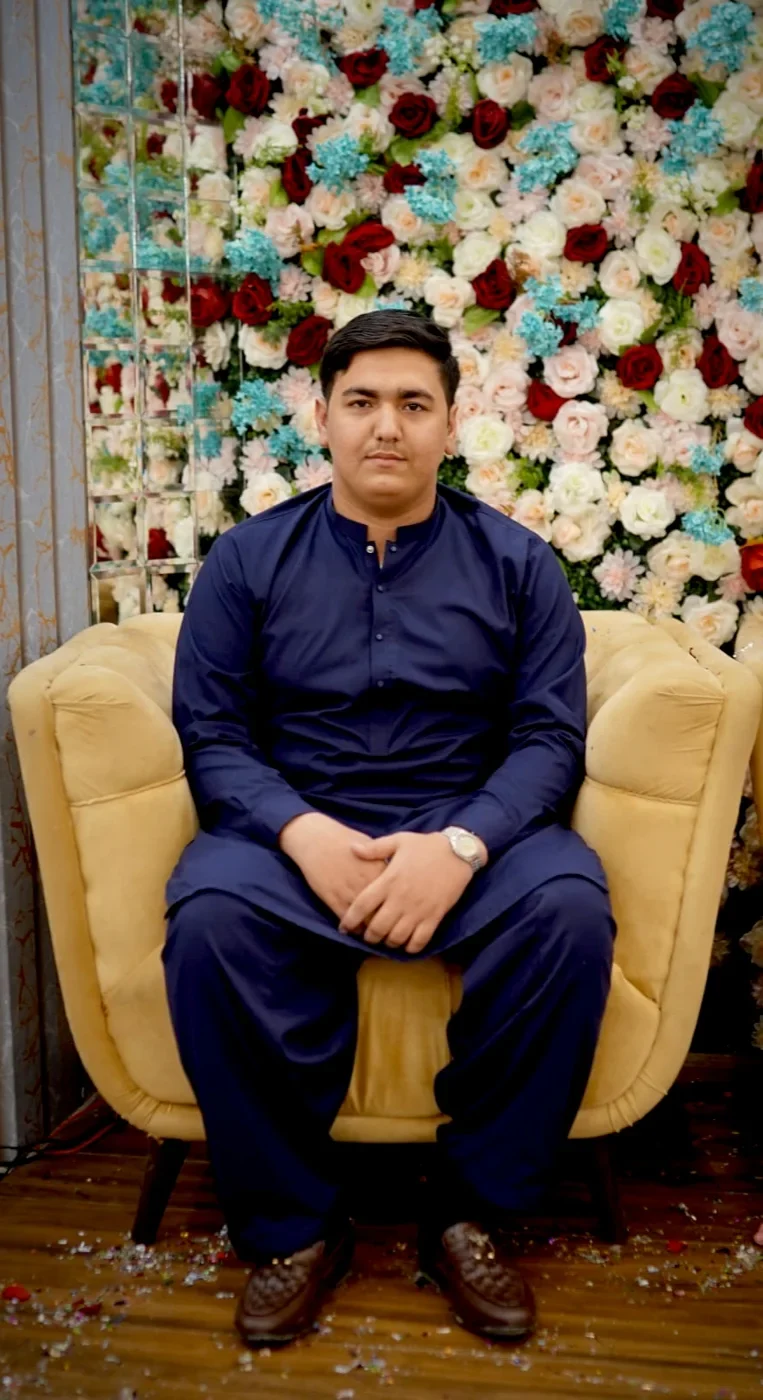
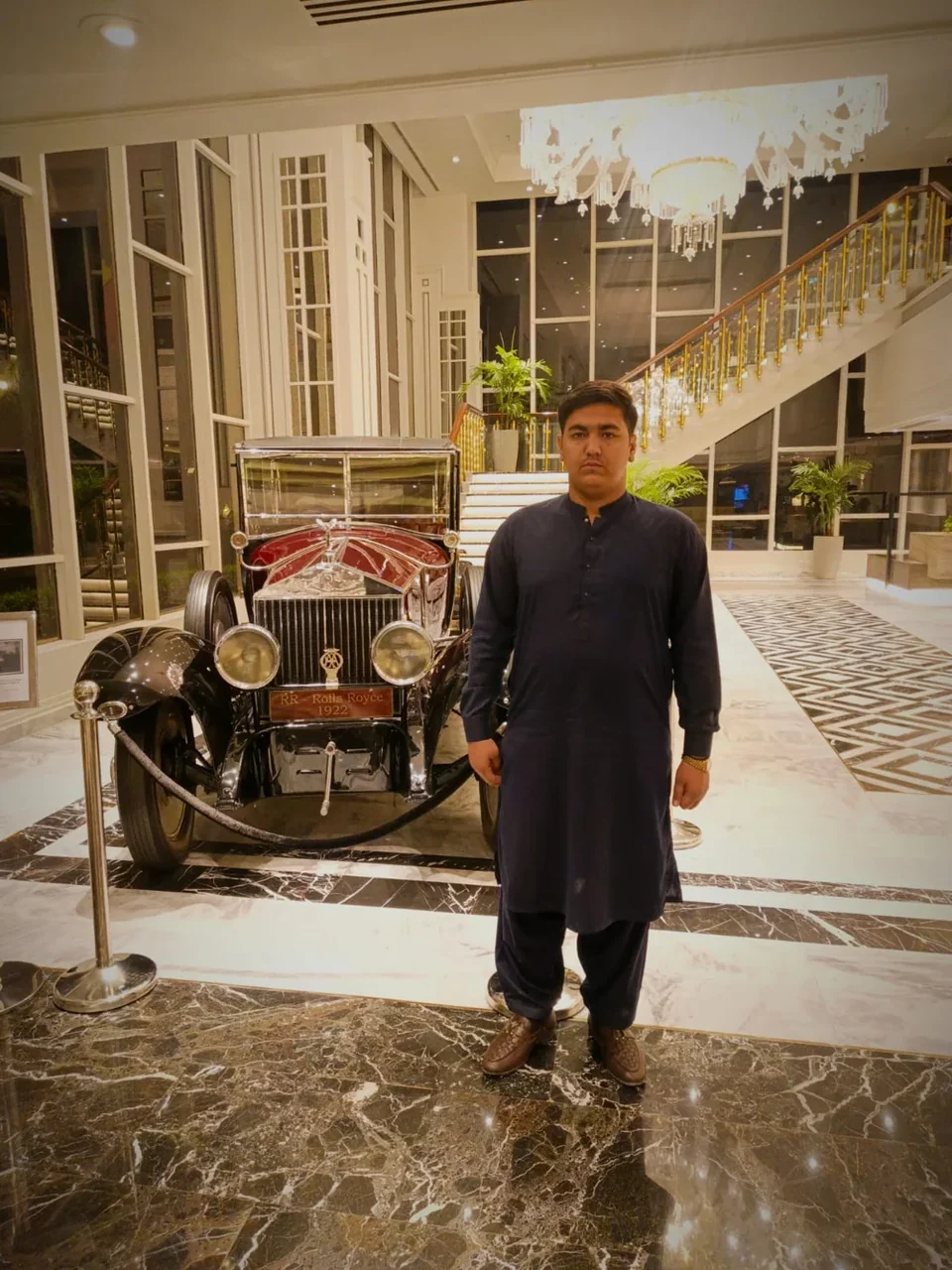
Build with purpose. Question with curiosity. Keep learning in public.
01 / DEVELOPMENT PHILOSOPHY
Clarity is a technical decision.
I want the things I build to make sense—to the person using them and to the person maintaining them. That starts before a framework is selected. What is the actual need? What would a useful first version do? What can we leave out?
My preference is for a small, understandable solution over a clever system that nobody can explain. Accessibility, readable content and predictable behavior are not finishing touches. They are part of the definition of working software.
The goal is not more software. It is a clearer, more useful outcome.
02 / TECHNICAL PROBLEM-SOLVING
Understand the failure before changing the code.
A confusing bug is an invitation to slow down. I try to describe the expected behavior, reproduce the problem and reduce it to the smallest useful example. The aim is to replace guesses with observations.
I follow the information: an input, an event, a request, a response, a state change. Browser tools, network traces and clear error messages help separate the symptom from the cause. Once there is a plausible fix, I check the original failure and the neighboring states—not just the successful path.
03 / REVERSE ENGINEERING & CODE ANALYSIS
Look beneath the interface. Respect the boundaries.
I am interested in how software behaves, not only how it looks. Reading unfamiliar code means tracing dependencies, identifying inputs and outputs, and forming a model of the system before attempting to change it.
Reverse engineering and security learning belong within an explicitly authorized scope. My approach is defensive and permission-based: use code I am allowed to inspect, respect licenses, work in controlled environments and avoid exposing private information. Understanding a system is never permission to misuse it.
04 / AI, AUTOMATION & APIs
Connect the tools. Keep a person in the loop.
An API is a contract between systems. I care about the parts beyond the first successful response: authentication, rate limits, unexpected data, retries, useful failure messages and the work needed when a dependency changes.
For AI-assisted workflows, the useful starting point is the process rather than the prompt. Define the input, the expected outcome and the review criteria. Automate the repeatable steps, protect sensitive data and make it clear when a person needs to take over. An impressive demo is not the same as a dependable workflow.
I like to move between the big picture and the smallest practical detail. A rough content outline or a simple flow can expose a problem earlier than a polished screen. An early implementation can reveal constraints that were invisible in a sketch.
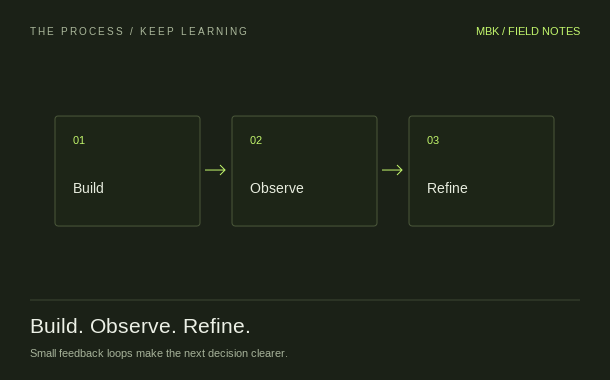
The process is iterative rather than ceremonial: understand the goal, sketch the structure, build the smallest useful version, inspect the behavior, and refine the result. I keep decisions and limitations visible so feedback has something concrete to respond to.
06 / LESSONS FROM THE PROJECT COLLECTION
The constraint often teaches more than the feature.
The projects in this portfolio offer different questions to think through. MBK TV brings content discovery and external playback dependencies into focus. MBK Markets raises questions about data context, freshness and how a chart behaves on a smaller screen.
A focused utility such as Text to Handwriting makes input clarity and output quality matter. Noor-e-Quran puts legibility, respectful content presentation and source accuracy at the center. These are observations drawn from the documented project scopes—not claims of client outcomes, commercial scale or production reliability.
The common lesson is simple: describe what exists honestly, test the experience people actually encounter, and make the next improvement specific.
Modern web development gives us extraordinary tools, but complexity is not a measure of quality. A fast, readable page with clear navigation can be more useful than a technically elaborate interface that gets in the way.
I see performance, semantics, accessibility, privacy and discoverability as connected concerns. A descriptive heading helps a reader, an assistive technology and a search engine. A smaller image improves the experience on a slow connection. A clear error state earns more trust than another animation.
08 / FUTURE TECHNOLOGY & INNOVATION
Stay curious. Stay accountable.
I want to deepen my understanding of application architecture, backend systems, APIs and automation, and explore how emerging AI tools can support useful digital products. That is a direction for learning, not a claim that every area is already an established specialization.
New technology deserves both curiosity and scrutiny. Does it solve a real problem? Can its behavior be evaluated? What happens when it is wrong or unavailable? Who remains responsible? Those questions make innovation more interesting, not less.
Bakhtawar Khan (MBK): A Digital Portfolio Built Around Practical Projects
A guide to the personal portfolio of Bakhtawar Khan (MBK), founder of MBK Global, and how its projects, services and official links are organized.
MBK NOTES · SEO / AEO / GEO
The portfolio of Bakhtawar Khan (MBK) brings together selected web projects, digital technology interests, service areas and contact options. The goal is to make the person, the associated MBK Global brand and individual projects easier for visitors to distinguish. A useful portfolio should explain what exists, link to working examples and keep claims proportional to evidence. Explore the Founder Profile, Projects and Official Links.
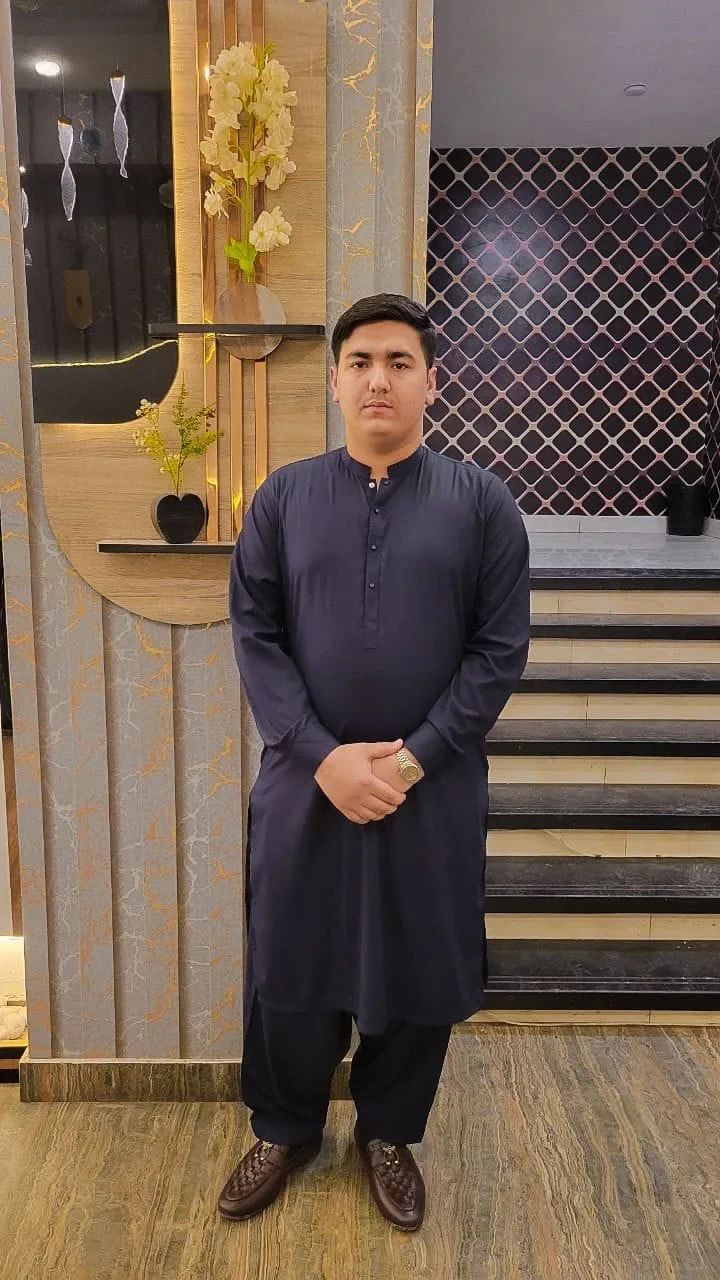
About the author: Bakhtawar Khan (MBK) is the founder of MBK Global. His stated focus areas include web development, AI/API integration, cybersecurity learning, technical SEO and digital branding.
My work begins with curiosity: how does this system work, who is it for, and what would make it more useful?
01 / BACKGROUND
A growing practice. An independent point of view.
I’m a technology enthusiast and digital creator building my skills across web development, modern JavaScript, React, applications, APIs and automation. I enjoy the point where technical problem-solving meets creative thinking: turning a complicated task into something understandable, usable and considered.
This portfolio brings together my independent projects, experiments and professional interests. Some ideas become useful browser tools; others become a way to understand a new integration, a design decision or the behavior of an application. I want the work to communicate what I am learning—not suggest that the learning is finished.
MBK is my professional identity. MBK Global is the associated brand connecting these projects and my longer-term direction. The person behind both is Bakhtawar Khan.
HTML, CSS, JavaScript and React provide a foundation for exploring responsive interfaces, reusable components, accessible navigation and clear application states. I care about how a product feels to use as well as how it is put together.
Connected systems
APIs interest me because they make separate tools work together. I’m learning through request handling, data transformation, integration experiments and understanding what happens when a service is slow, unavailable or returns unexpected data.
AI & useful automation
My interests include knowledge-based assistants, chatbots, WhatsApp workflows and practical AI-powered tools. The useful question is not whether a task can be automated, but which parts should be—and where a person should remain in control.
Beneath the interface
Reverse engineering, code analysis, technical research and web security help me investigate software behavior. My approach is permission-based and defensive: understand the system, respect its boundaries and protect other people’s information.
Discoverability & quality
Technical SEO, metadata, crawlability, page performance and thoughtful content structure connect development with the people who need the result. Good presentation should support useful information, not replace it.
03 / LEARNING IN PRACTICE
A more honest way to describe the toolkit.
Visible in this portfolio
HTML, CSS, JavaScript, React components, responsive layouts and structured technical content. The pages and linked projects are the places to review the work.
Developing through experiments
Python, API integration, AI-assisted applications, conversational interfaces, workflow automation, performance and technical SEO.
Exploring further
Backend development, API design, databases, application architecture, Android and mobile applications, Telegram bots, supported social integrations, deployment and cloud tools.
These distinctions matter. An interest is not a certification, and a prototype is not evidence of a production deployment. I prefer to explain a project’s actual scope and constraints rather than present every technology as an established specialization.
04 / MAKING & REFLECTING
Learning becomes clearer when something has to work.
Personal projects give me room to test an idea from more than one angle. MBK TV explores media discovery; MBK Markets explores a market-data interface; MBK Video Downloader and Text to Handwriting explore practical web utilities; Noor-e-Quran brings a different set of content and usability questions.
Their value is not only in the visible result. Planning a flow, investigating a failure, checking a layout on a smaller screen and revisiting a confusing decision all develop a better understanding of the product. Features and availability can change; project pages provide the context rather than a promise of permanent functionality.
I start by understanding the need, the audience and the constraints. Then I break the problem into manageable pieces, build a small version, inspect what happens and refine it. I value reliable behavior, clear communication and room for feedback more than adding features simply because they are possible.
Responsible technology is part of that process. Privacy, accessibility, respectful communication and permission-based research should shape the work from the beginning. Collecting less data, explaining limitations and making an interface usable for more people are practical development decisions—not finishing touches.
06 / LOOKING AHEAD
Deeper understanding. More useful things.
I want to strengthen my development skills, understand application architecture more deeply and connect AI, APIs and automation in ways that solve real problems. My direction includes useful tools, chatbots and digital products with clear purposes and understandable boundaries.
My journey is still evolving. The aim is a stronger body of work and a professional identity grounded in thoughtful execution, not the size of the claims. If you have a project that fits that approach, I’d welcome a clear conversation about what you want to build.